
The investor follow up email: write it from what they read
Most advice about the investor follow up email is a calendar. Follow up after a week. Then again after two. Then once more. It's tidy, and it ignores the one thing you might actually know: what the investor did with your deck.
Our guide on finding investors for your startup suggests a different approach. Track who reads what and follow up on that, not on a fixed schedule.
Why behavior beats a calendar
An investor who hasn't opened your email needs a different note from one who read every page. Sending them both the same "just checking in" wastes the chance to be useful to either.
If you send your deck as a tracked link, you can see roughly what happened: whether it was opened, how far they got, and which pages they spent time on. That's enough to choose the right next message. You don't need a script for every case. You need to notice which of a few situations you're in.
Four situations, in plain terms

These thresholds come from our pre-seed guide and our guide with templates for emailing investors.
They haven't opened it. After about three business days, send one short resend. Don't explain or apologize. A sample, for a fictional company: "Hi Jordan, resending in case this got buried. We build route planning for home-care nursing agencies. Deck: [link]."
They opened it but skimmed. Send a short note that points at the page most relevant to them. Lead with the topic, not with the fact that they skimmed.
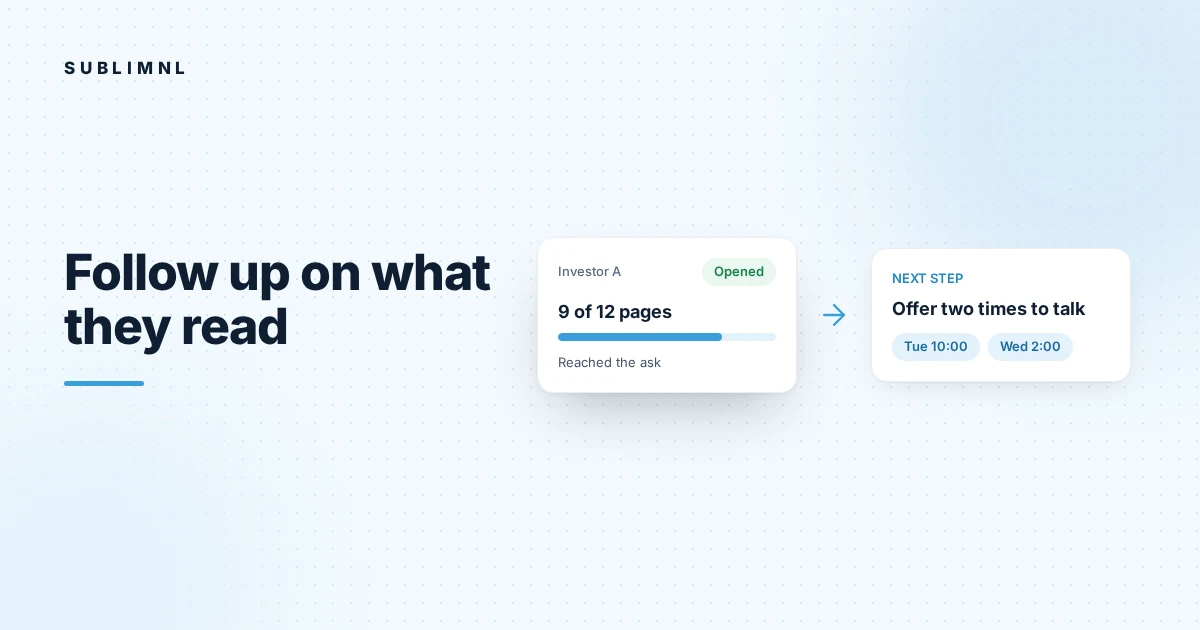
They read most of it, or reached the ask. This is the moment to offer a call. Follow up within a day or two with something specific about the part they focused on, and two specific times.
No reply after two follow-ups. Send a brief closing note, then stop. A clean close leaves the door open for a later round.
The rule that matters most
Never mention reading data in the follow-up itself. Don't say "I saw you spent time on the traction slide." Write about the topic, not about the tracking.
The reading data shapes what you say. It never appears in what you say. Each note should be about something real in the business.
If you can't see what they read
If you sent an attachment or an untracked link, you don't know what happened. That's fine. Use a gentle default: one resend after about three business days, one more note with something new and true, then a closing note. Keep each one short.
A good follow-up adds information. A new customer, a product release, a pilot result, a hire who matters. If nothing has changed, a short, specific answer to the obvious question about your company works too. "Just checking in" adds nothing, so avoid it.
When to stop
After two follow-ups with no reply, send the closing note and stop. That's not giving up. An investor who passes now may be a good fit at your next round. Pestering them makes that less likely.
Stop, too, the moment they reply. A reply turns this into a conversation, and the follow-up sequence no longer applies.
Where Sublimnl fits
Sublimnl drafts each follow-up from what that investor read. If someone spent most of their time on one page, the note leads with that topic. If they haven't opened after three business days, it drafts a short resend. A reply stops the drafts, follow-ups never tell investors they were tracked, and you send each one yourself. See how it works.
The full playbook is inside Sublimnl. This page is the idea: match the note to what they did, and stop.
FAQ
How long should I wait to follow up with an investor?
If they haven't opened your email, about three business days, then resend once. If they read it, follow up within a day or two with something specific.
How many times should I follow up?
Two follow-ups, then a brief closing note. After that, stop unless you have genuinely new news to share later.
Should I tell an investor I saw them read my deck?
No. Write about the topic they cared about, not about the fact that you could see it.