
BlogIntroductions
How to get noticed by investors before you ever email them
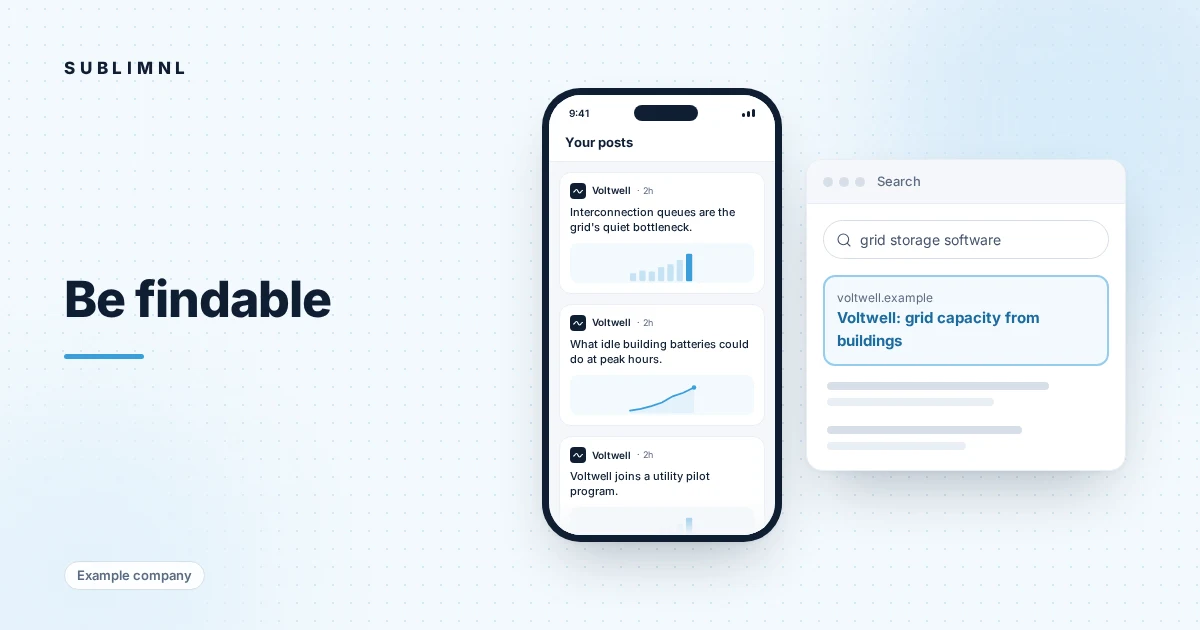
Picture a partner at a fund, early on a weekday, reading through what people in her sector are writing about. She isn't looking at a pitch. She's looking at a market, trying to work out where the interesting problems are. That's a big part of how to get noticed by investors: be part of what she finds when she goes looking.
It's not a hunch. In the survey of 885 venture capitalists cited in our guide on finding investors for your startup, almost 30% of deals were found by the investors themselves (NBER Digest summary). Investors go looking for deals, so being findable matters as much as being on someone's list.
What "findable" means in practice
Being findable isn't about going viral. It's about making sure that when someone curious searches for your market, your company or your name, they find something real and useful.
For most early founders, that comes down to four things:
- Posts about your market from your own accounts.
- Real company news, published when you have it.
- A website that says plainly what you do and for whom.
- Founders and operators who know your work and could mention you.
None of these needs a budget. All of them take a bit of steady attention.
How to get noticed by investors with posts about your market

The useful posts are about the problem, not about you. Write about what's changing in your market, why the usual fix falls short, and what you've seen work. A founder building inventory software for independent bike shops has a lot to say about seasonal stock, supplier lead times and why spreadsheets break every spring. That's interesting to someone who invests in retail software, and none of it needs a product pitch.
A few habits keep this honest and sustainable:
- Pick one problem and stay on it. Range is less useful than depth. People should be able to say what you write about in a sentence.
- Use real details. One specific observation from your own work beats a broad opinion.
- Don't announce the round. Posting about your market is different from advertising a raise. If you're raising under Rule 506(b), you can't use general solicitation to market the offering. Our post on whether you can post that you're raising covers the line, and it's worth a conversation with your lawyer.
Publish real news when you have it
When an investor hears your company's name, the first thing they'll often do is look you up. What they find should be real: a launch, a pilot that went live, a hire, a partnership. Not a stream of minor updates dressed up as milestones.
Timing helps. Our pre-seed guide suggests putting out a short press release in launch week, Tuesday to Thursday, so an investor who looks you up after your email finds something current. If you don't have news worth a release, don't invent some. An up-to-date site and a few good posts do the job.
The order matters: the problem first, then your deck
Here's the part founders often get backwards. They send the deck, and only then start posting. By that point the posts can't help the first impression.
Flip it. Let the problem you solve get talked about for a while before your deck goes out. Then, when a partner opens your email, the subject isn't arriving from nowhere. She may have read something about it that week, from you or from someone else. By the time your deck arrives, the timing already feels right.
That's all this is. You're not engineering anyone's attention. You're making sure the conversation about your market has started before you ask someone to invest in it.
What nobody can promise
No one can tell you which investors will see a given post. Reach depends on your own audience and on who happens to find it. Treat findability as something that improves your odds over time, not a switch that guarantees a meeting.
It also doesn't replace the other channels. In the same survey, over 30% of deals came through investors' professional networks and about 20% were referred by other investors. Being findable works best alongside warm introductions, not instead of them.
Where Sublimnl helps
Sublimnl is a fundraising outreach tool built around this order. For about two weeks before your deck lands, posts about your market go out from your own accounts. None of them name your company. It doesn't buy ads or placement. If you'd rather do it by hand, the steps above are the whole method. If you want it organized for you, see how it works.
FAQ
Do I need a big following to get noticed by investors?
No. A small audience in the right market is more useful than a large general one. What matters is that someone searching your market finds clear, specific writing from you.
Should I post that I'm fundraising?
Be careful. Under Rule 506(b) you can't use general solicitation to market the offering. Posting about your market and product is different, but ask your lawyer before you post about the raise itself.
How long before my raise should I start posting?
Earlier is better, but even a couple of weeks of steady, specific posts about your market means the problem has been talked about before your deck goes out.