
BlogEmail
Should you cold email investors? Yes, when the fit is real
Founders hear two opposite pieces of advice. One says never cold email investors, because nobody reads them. The other says email hundreds, because it's a numbers game. Both are wrong in the same way: they ignore fit.
Our guide on finding investors for your startup answers it directly. Cold email investors if the fit is real and the email is specific. Just know what you're working with, and do a little groundwork first.
What you're working with
Cold email is the smallest channel. In the survey of 885 VCs our guide cites, only about 10% of deals arrived as inbound pitches from founders (NBER Digest summary). Our breakdown of how VCs find deals covers the rest of the split.
Small isn't zero. Plenty of good investors read cold email, especially from founders who clearly did their homework. The point is that cold email works best when it isn't the only thing the investor has heard about your market.
Let the problem get talked about first

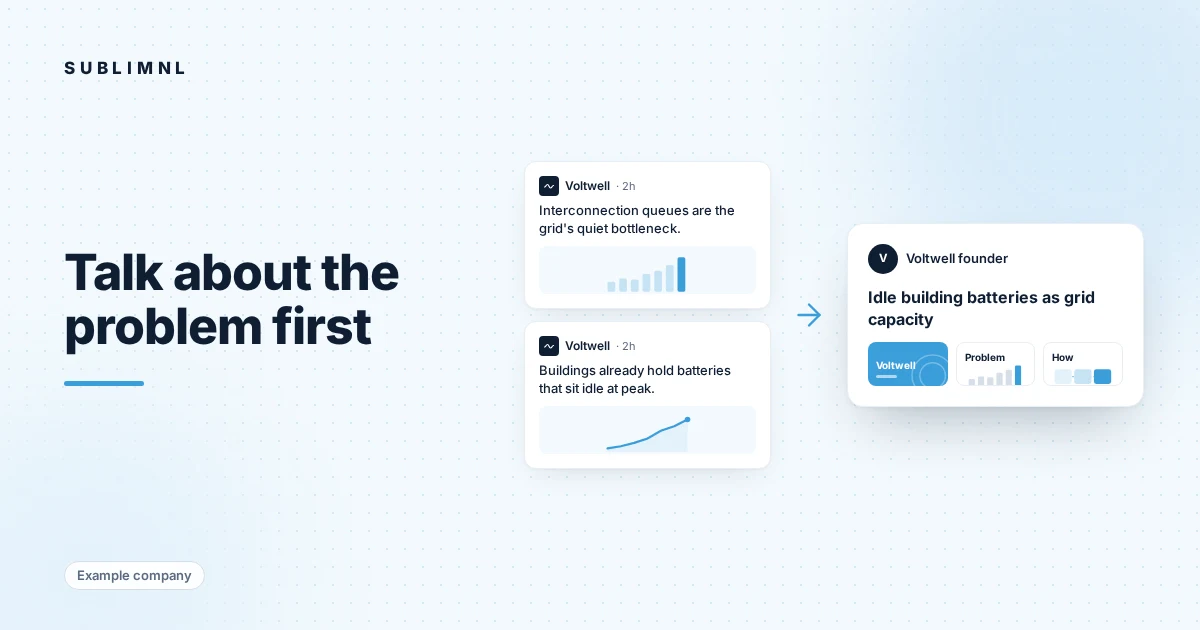
Here's the approach in one sentence: the problem gets talked about before the deck arrives, then you send a short, specific email.
In practice, that means spending a couple of weeks before your send posting about your market from your own accounts. Not about your company or your round. About the problem: what's changing, why the usual fix falls short, what you've seen work. A founder building fraud checks for small online lenders might write about how loan-stacking has changed, without a word about their product.
There's no trick in this. You're not trying to get anyone to see anything. You're making sure the conversation about your market has started before you ask someone to fund it. If an investor happens to have read about the problem that week, so much the better. If not, your email still has to stand on its own.
Who belongs on the cold list
Cold doesn't mean random. Every cold investor should still pass the fit check: right stage, right sector, right region, and ideally a firm that leads rounds like yours. Our guide's tier table calls these "cold but right": perfect fit, no connection yet.
If you can find a warm path to someone, use it instead. Cold is for good-fit investors you can't reach any other way.
How to cold email investors so the email gets read
Keep it short. Our guide with templates for emailing investors suggests under about 120 words. The structure:
- A specific subject line. What you do, for whom, and one proof point.
- One line on what you do. Plain words.
- One line of real proof. Users, revenue, pilots, a signed letter of intent. Only numbers you can back up.
- The ask. How much, what round, what instrument.
- Why them. A company they backed, a post they wrote, their stated thesis.
- The deck, with the first slides in the email if you can.
Send one email per investor, with only their address in the To line. No group sends.
Send them together
Don't trickle cold emails out over months. Send to your whole list in one tight window, ideally midweek. Investors compare notes, and a round with several conversations under way at once is easier to take seriously.
Follow up on what they did
After you send, follow up based on what each investor actually did. If someone hasn't opened after about three business days, resend once. If they read it, follow up with something specific about the part they focused on. Stop after two unanswered follow-ups. And never tell an investor you saw what they read.
How Sublimnl runs this
Sublimnl is a fundraising outreach tool that runs this sequence end to end. For about two weeks before your deck lands, posts about your market go out from your own accounts. None of them name your company. On launch day, each investor gets a separate email with your first slides inside it, and follow-ups are drafted from what they read. The tool can't promise who sees a post. The details are on how it works.
If your list is mostly warm, skip all this and email them yourself.
FAQ
Do cold emails to VCs actually work?
They can, if the investor fits and the email is short and specific. It's the smallest channel for deals, so it works best alongside warm introductions and after your market problem has been talked about.
How long should a cold email to an investor be?
Short enough to read on a phone in under a minute. Three to five sentences, plus the deck.
Should I mention my posts in a cold email?
No need. The email should stand on its own: what you do, proof, the ask, why them, and the deck.