
BlogIntroductions
How to ask for a warm introduction to investors
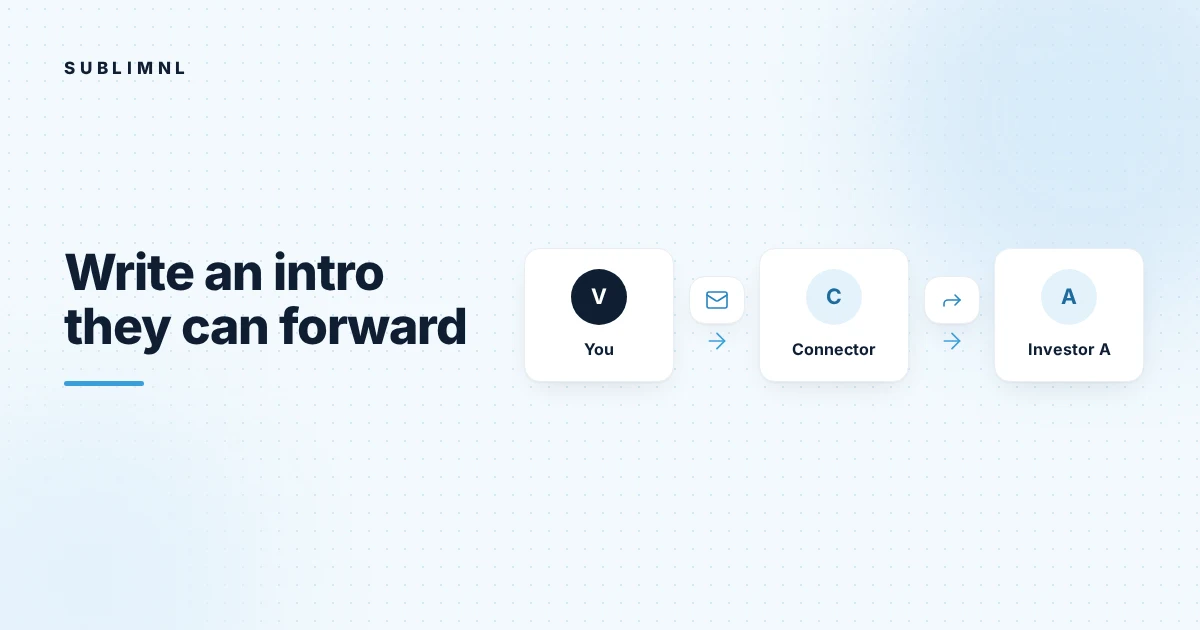
A warm introduction to investors is still the strongest way into a round. In the survey of 885 venture capitalists cited in our guide on finding investors for your startup, over 30% of deals came through investors' professional networks and about 20% were referred by other investors (NBER Digest summary). Only about 10% came in as inbound pitches.
So the ask matters. Done well, it's easy for the person in the middle to say yes, or no. Done badly, it puts them in an awkward spot and the introduction never happens.
Who's doing whom a favor
Start with the right frame. The person introducing you, the connector, is spending their own credibility with the investor. Every introduction they make is a small bet that you're worth the investor's time.
Your job is to make that bet easy and safe. That means doing the research, writing the note for them, and leaving them free to decline.
Before you ask: check the fit

Don't ask for an introduction to an investor who doesn't fit. Confirm the investor invests at your stage, in your sector and in your region. Know which partner you want to reach, and why. A connector who sends you to the wrong person once is less likely to help a second time.
The forwardable note
This is the most useful thing you can give a connector. Write it so they can forward it unchanged. Our guide with templates for emailing investors includes a version you can copy. The structure:
- The ask. "Would you be open to introducing me to [investor] at [firm]?"
- Why them. One line: a company they backed, a thesis they've stated, a reason the fit is real.
- The short version for the investor. What you do, one line of real proof, what you're raising.
- An easy out. "Happy to send a deck first if that's easier. No worries if it's not a fit."
That's it. Keep the whole thing short enough to read on a phone.
A fictional example
"Hi Priya, would you be open to introducing me to Marcus at the fund that backed your company? They've led seed rounds in construction software, and we're building scheduling tools for specialty subcontractors.
Short version Marcus can read: we help electrical and plumbing subcontractors plan crews across job sites. A handful of firms are using it on live projects. We're raising a seed round.
Happy to send a deck first if that's easier. No worries if it's not a fit."
Notice that the second paragraph stands alone. Priya can paste it straight into an email to Marcus without rewriting anything.
Double opt-in introductions
Many connectors, and many investors, prefer a double opt-in. The connector first asks the investor whether they'd like the introduction, and only connects you if the investor says yes.
Encourage it. Say something like "Feel free to check with Marcus first." It protects the connector's relationship, and it means that when the introduction arrives, the investor has already agreed to read it.
Where a warm introduction to investors comes from
If you think you don't have any, look again:
- Founders the investor has backed. Portfolio founders are among the strongest connectors. Our post on founders who just raised covers how to approach them.
- Angels who co-invest with the firm.
- Your own investors and advisors, if you have any.
- Former colleagues who now work in venture or with investors.
After the introduction
When the connector introduces you, reply promptly. Thank them, move them to bcc so they're not stuck in the thread, and send the investor what you'd send in a good first email: one line on what you do, one line of proof, the ask, and the deck.
Then tell the connector how it went, whatever the outcome. People keep helping founders who close the loop.
How many introductions to ask for
Ask for introductions early, before your main send, so warm conversations are under way when the rest of your list hears from you. Don't ask one connector for several introductions at once unless they offer. Spread the asks.
Keep a simple record of who you've asked, for which investor, and when. It stops you asking two people for the same introduction, which is awkward for everyone if the investor hears your name from both in the same week.
FAQ
How do I ask for an intro to a VC without seeming pushy?
Make it specific and easy to decline. Say who you want to meet and why, give the connector a short note they can forward unchanged, and tell them it's fine to say no.
What is a forwardable email?
It's a short note about your company written so the connector can forward it to the investor without editing. It usually covers what you do, one line of proof, and what you're raising.
What if the investor declines the introduction?
Thank the connector and move on. A declined double opt-in saves everyone time, including you.