
BlogThe list
How to run a fundraising process in one tight window
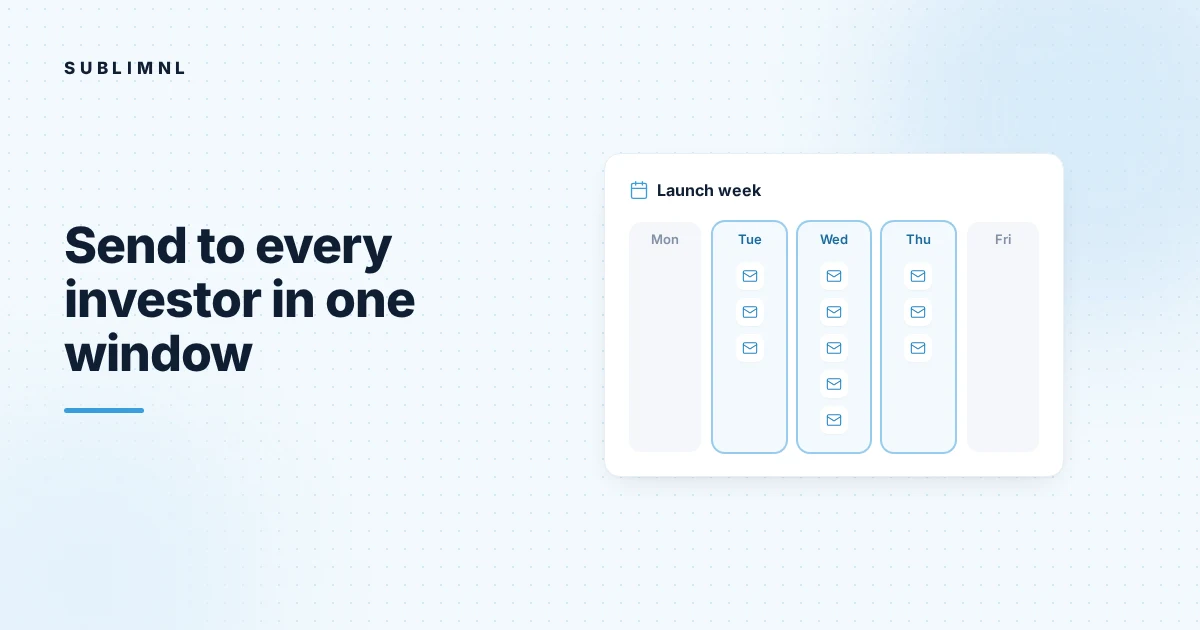
Ask founders how to run a fundraising process and many will describe the pattern they fell into the first time. They sent the deck to one investor, waited for a reply, then sent it to another, then a couple more the following month. Months later, the round was still "open," and every new investor asked the same question: who else is in?
The fix is simple to describe and takes some discipline to do. Our guide on finding investors for your startup says: send to everyone in one tight window instead of one at a time over months. That one idea does most of the work.
Why one window works
Investors talk to each other. A round that feels active gets more attention than one that drifts.
When every investor hears from you around the same time, a few things happen. Meetings cluster, so you can compare interest instead of guessing. Early interest from one investor is still fresh when you talk to the next. And when someone asks about your timeline, you have a real answer, because your timeline is real.
Drip-sending does the opposite. Each conversation starts cold. By the time you have a lead, your first conversations have gone stale.
How to run a fundraising process: the shape of it

Our pre-seed guide lays out a plan built around one launch day. In outline:
The weeks before launch day
- Build and qualify your list. Every name passes stage, sector and region.
- Sort it into tiers. Warm, familiar, cold but right, and cut the wrong fits.
- Ask for warm introductions early, so those conversations are under way by launch day.
- Let the problem get talked about. Post about your market, not your raise, from your own accounts.
- Get the pieces ready. Deck, a short email, your ask, a one-page note on your cap table and key terms.
Launch day
Pick a Tuesday, Wednesday or Thursday. Send each investor a separate, personal email on the same day, with your first slides in the email body so they can judge the pitch without clicking.
Why midweek? It keeps you away from Monday backlogs and Friday afternoons. To be honest about it, that's convention, not science. Midweek sending is a sensible default, not a proven edge.
The days after
Follow up on what each investor did, not on a fixed calendar. Our guide suggests one short resend if they haven't opened after about three business days, a pointed note if they skimmed, and two specific call times if they read most of it. After two unanswered follow-ups, send a brief closing note and stop.
Fundraising timeline: what goes where
| When | What happens |
|---|---|
| A couple of weeks before | Market posts begin, warm intro asks go out |
| Launch week | A short press release, if you have real news |
| Launch day | Every investor gets their own email, same day |
| The days after | Follow-ups based on what each investor read |
Notice what's missing: months of waiting between sends.
What if an investor asks for the deck early?
It happens, especially with warm introductions. Send it. The single window is a default, not a rule to apply rigidly. The aim is that most of your list hears from you at roughly the same time, so the round has momentum.
What a tight window asks of you
It's more work up front. You need your list qualified, your deck finished and your emails written before launch day, rather than doing it all as you go. You also need time in the following weeks for meetings, which can stack up.
That's the trade. A compressed, busy few weeks, in exchange for a round that either comes together or tells you clearly that it isn't working. Either answer is better than months of drift.
It also helps to block your calendar before launch day. Leave room for first meetings in the following two weeks, and keep a short note ready on your cap table and key terms for when an investor asks. Being ready to move quickly is part of what makes a tight window work.
Where Sublimnl fits
Sublimnl is built around a single launch day. You pick it, a Tuesday, Wednesday or Thursday at least 14 days out so there's room for the warm-up, and every investor gets their own email that day with your first slides inside. Follow-ups are drafted from what each investor read, and you send each one. More on how it works.
FAQ
What's the best day to email investors?
Tuesday to Thursday is a common convention, because it avoids Monday backlogs and Friday afternoons. It's a sensible default, not a proven advantage.
How long should a fundraising process take?
It varies widely. Running outreach in one tight window, with preparation beforehand and a single send day, helps you learn quickly whether the round is working.
Should I send to my top investors first and the rest later?
Generally no. Ask for warm introductions early, but send your deck to the rest of your list in the same window, so interest builds together instead of going stale.