
BlogFilings
506b vs 506c: can you post publicly that you're raising?
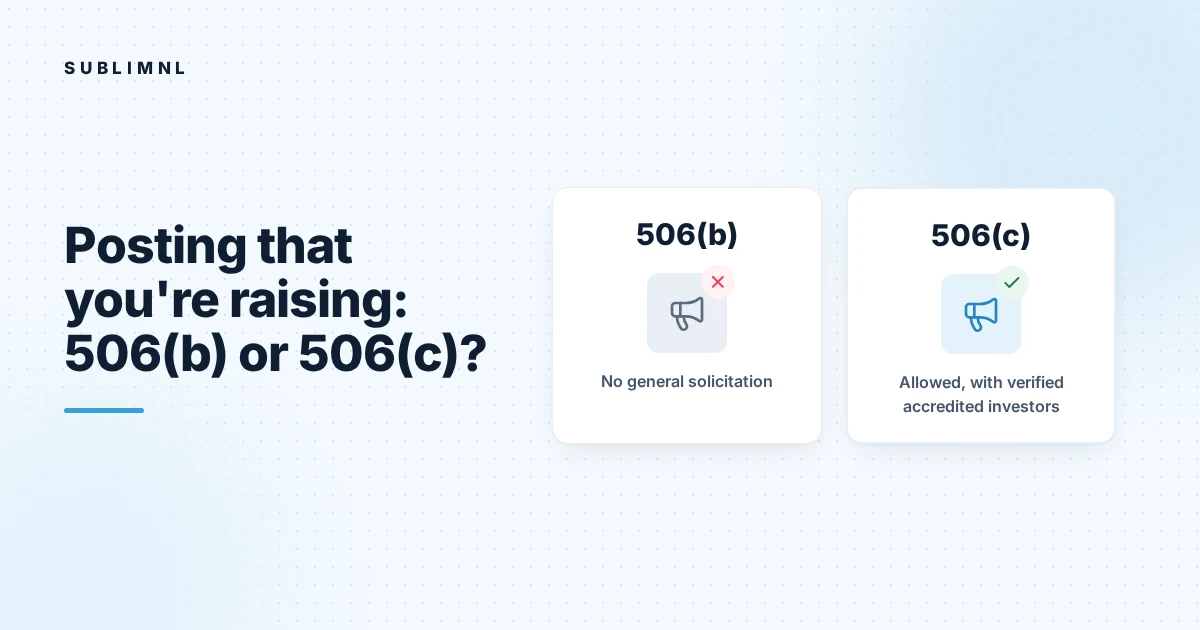
You've just decided to raise, and the obvious move is to tell everyone. Post it, share the deck, invite investors to get in touch. Before you do, it's worth understanding 506b vs 506c, the two rules most US startups raise under, because one of them doesn't allow that kind of post.
This is a plain summary of what the SEC says, written for founders. It's not legal advice. Talk to your lawyer before you post anything about your raise.
The short version
In the US, every offer and sale of securities has to be registered with the SEC or rely on an exemption. Most early startup rounds rely on Regulation D, and usually on Rule 506(b) or Rule 506(c). Here's how the SEC describes them on its exempt offerings page:
- Rule 506(b) is a private placement that prohibits general solicitation. The SEC also notes it limits sales to no more than 35 non-accredited investors in any 90 day period.
- Rule 506(c) is a private placement that permits general solicitation, where all purchasers are accredited investors and the issuer takes reasonable steps to verify that they are.
So the core difference is simple. Under 506(b), you can't publicly market the offering. Under 506(c), you can, but everyone who invests has to be accredited, and you have to take reasonable steps to verify it.
506b vs 506c in practice

506(b) is the familiar route for many early rounds. You raise from investors you already have a relationship with or reach privately, through introductions and direct outreach. What you can't do is broadly advertise the round.
506(c) lets you talk publicly about the raise. The trade-off is the verification step. "Reasonable steps to verify" is more than asking an investor to tick a box, and it adds work for you and for your investors.
Under either rule, the SEC says a Form D must be filed within 15 days after the first sale of securities in the offering.
Which one fits your round is a decision for you and your lawyer. Many founders don't realize which rule they're raising under until someone asks. Find out before you start posting, because it changes what you can say in public.
Posting about your market is different
Here's the part that matters most for day-to-day posting. Our guide on finding investors for your startup puts it this way: posting about your product and market is different from advertising the offering.
Writing about the problem you solve, the trends in your industry, or real company news is how founders become findable. It's also a different thing from saying "we're raising, here are the terms, get in touch." Our post on getting noticed by investors covers how to post about your market without talking about the round.
The line can blur, though. A post that hints at a raise, mentions a round size, or invites investors to reach out starts to look like marketing the offering. Our pre-seed guide is direct about this: keep warm-up posts about the market, and ask your lawyer before you post anything about the raise itself.
What to keep out of public posts under 506(b)
Again, check with your lawyer. But as a sensible starting point, be careful with:
- Saying you're raising, or how much.
- Terms, valuation or instrument.
- Calls for investors to contact you.
- Sharing the deck publicly.
- Teasers that make it obvious a round is open.
None of that stops you posting about your market, your product, your customers or your hires. Those posts are often the most useful thing you can publish anyway.
What about LinkedIn specifically?
The SEC's rules don't single out any one platform. The question is what you're saying, not where. A post about your market is a post about your market wherever it appears. A post marketing your offering raises the same questions on any channel.
When to talk to a lawyer
Before you post anything about the raise itself. Before you decide between 506(b) and 506(c). And if you've already posted something and aren't sure whether it crossed the line. A short conversation early is far easier than fixing a problem later.
FAQ
Can startups advertise that they're fundraising?
Under Rule 506(c), the SEC permits general solicitation if all purchasers are accredited investors and the issuer takes reasonable steps to verify that. Under Rule 506(b), general solicitation is prohibited. Check with your lawyer before you post about a raise.
Is posting about my market considered general solicitation?
Posting about your product and market is different from advertising the offering, but the line can blur. Keep posts about the market, and ask your lawyer before posting anything about the round.
Is this legal advice?
No. It's a plain summary of what the SEC's exempt offerings page says. Talk to a securities lawyer about your own situation.