
BlogResearch
Read the VC investment thesis, then describe your sector in its words
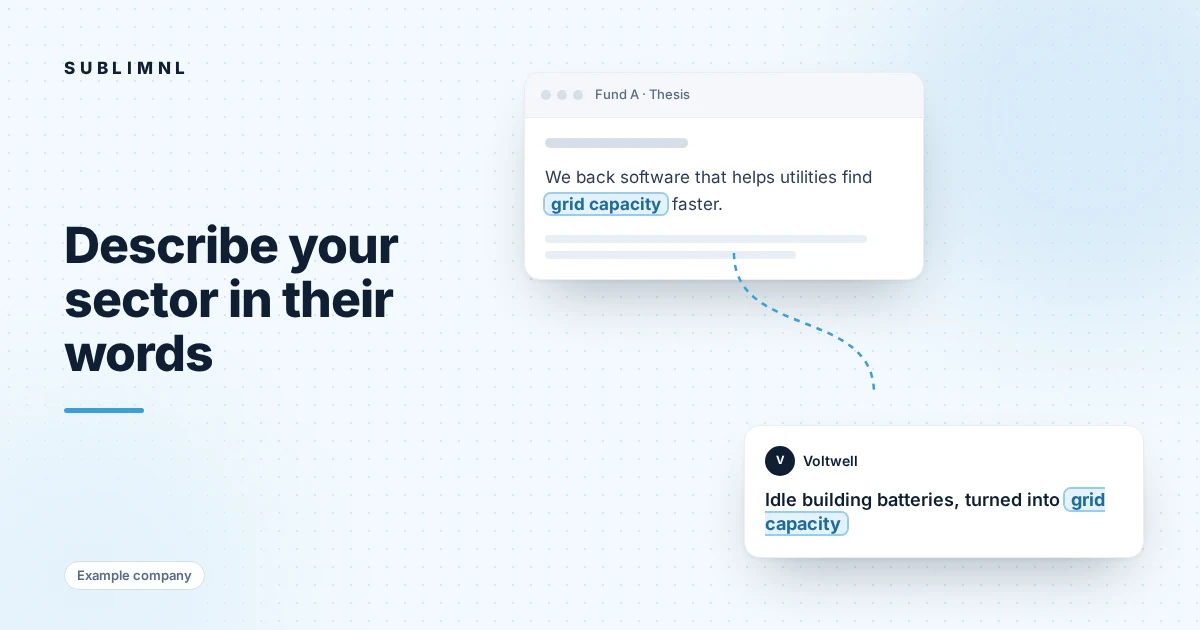
Every firm worth pitching has a VC investment thesis somewhere, usually on its own website. It might be a full page, a paragraph on the homepage, or a line in a partner's bio. It tells you, in the firm's own words, what they want to back. Most founders skim it to check they're "roughly in the area." It's worth more than that.
The most useful thing a thesis gives you is vocabulary. If you can describe your sector in one phrase that an investor would put on their own thesis page, the fit is clear before they open your deck.
Why one phrase matters so much
Investors read a lot of email. The first line decides whether the rest gets read, and the subject line decides whether the first line gets read at all.
When your description uses the same words the firm uses, the partner doesn't have to translate. "Payments infrastructure for marketplaces" lands faster with a fund whose thesis talks about "the infrastructure behind marketplaces" than a phrase you invented for your homepage. You're not changing what you do. You're choosing the description that makes the match obvious to the person reading.
Our guide on finding investors for your startup lists this as one of four lines to write before you build a list: round and size, who leads, your sector in one phrase, and where you are. The sector phrase is the one founders tend to get wrong, usually by making it too clever or too broad.
How to read a VC investment thesis

A thesis page can be vague or very specific. Either way, read it for four things.
- The nouns. What markets, customers or technologies do they name? These are the words to borrow.
- The stage. Many thesis pages say when they invest, even if only in passing. If it says they lead seed, that tells you a lot.
- The examples. Firms often illustrate the thesis with portfolio companies. Those companies show you what the words mean in practice.
- What's missing. If a firm writes at length about one sector and never mentions yours, that's a signal too.
Then check the thesis against the portfolio. A firm's recent investments are the most honest version of its thesis. If the page says one thing and the recent deals say another, trust the deals.
Our post on researching a VC firm's website covers the rest of what to read on the site: stated stage, check size, and how they want to receive pitches.
Writing your one phrase
Start plain. Write what you do and who it's for in a way a smart friend outside your industry would understand. Then compare it with the thesis language from the firms on your list.
A few tests help:
- Could an investor file it? If a partner had to tag your company with one label, would your phrase be that label?
- Is it narrow enough to be true? "Healthcare AI" describes a huge number of companies. "Scheduling software for physical therapy clinics" covers yours.
- Does it match more than one firm? If you need a different phrase for every investor, your list may be too spread out. A good list shares a vocabulary.
- Would you use it out loud? If it sounds odd in conversation, it'll read oddly in an email too.
Keep the phrase stable once you have it. Use it in your subject line, the first sentence of your email, and the first slide. Repetition is what makes a company easy to remember.
Match the partner, not only the firm
At most firms, one partner covers your sector. Their posts, talks and past investments tell you what they care about. That's often sharper than the firm's thesis, because it's one person's view rather than a group compromise.
Read what they've written recently. If a partner keeps returning to one problem, and your company addresses it, that's what your first line should be about. We go deeper on this in pitching the right VC partner.
Using the thesis in your email
The thesis earns its keep in the "why you" line. It's the one line a template can't write for you, and the one that shows you didn't send the same email to hundreds of people.
A good "why you" line points to something real: a company they backed, a post they wrote, or their stated thesis. "Your thesis page says you back the software behind independent clinics, and that's what we build" is short, specific and easy to check. Make sure it's true. A forced match reads worse than none.
When the thesis doesn't fit
Sometimes you'll read a firm's thesis and realize the match was wishful. That's useful. Take them off the list. A firm that doesn't back your sector won't be persuaded by a better phrase, and the time is better spent on a partner who already cares about your problem.
If you notice your phrase only fits a few firms, step back. Either the phrase is too narrow, or the market of investors for your company is genuinely small. Both are worth knowing early.
FAQ
Where do I find a firm's investment thesis?
On the firm's own website, usually on an about, focus or approach page, and sometimes in partner bios. Partners' posts and talks often say more than the official page.
Should I change how I describe my company for each investor?
Keep the core phrase the same. Adjust the "why you" line for each investor so it points to something specific: a portfolio company, a post they wrote, or their stated thesis.
What if a firm has no thesis page?
Read the portfolio instead. The companies a firm has backed recently tell you what it invests in, and often in clearer terms than a thesis page would.