
BlogResearch
How to find out who invested in a company like yours
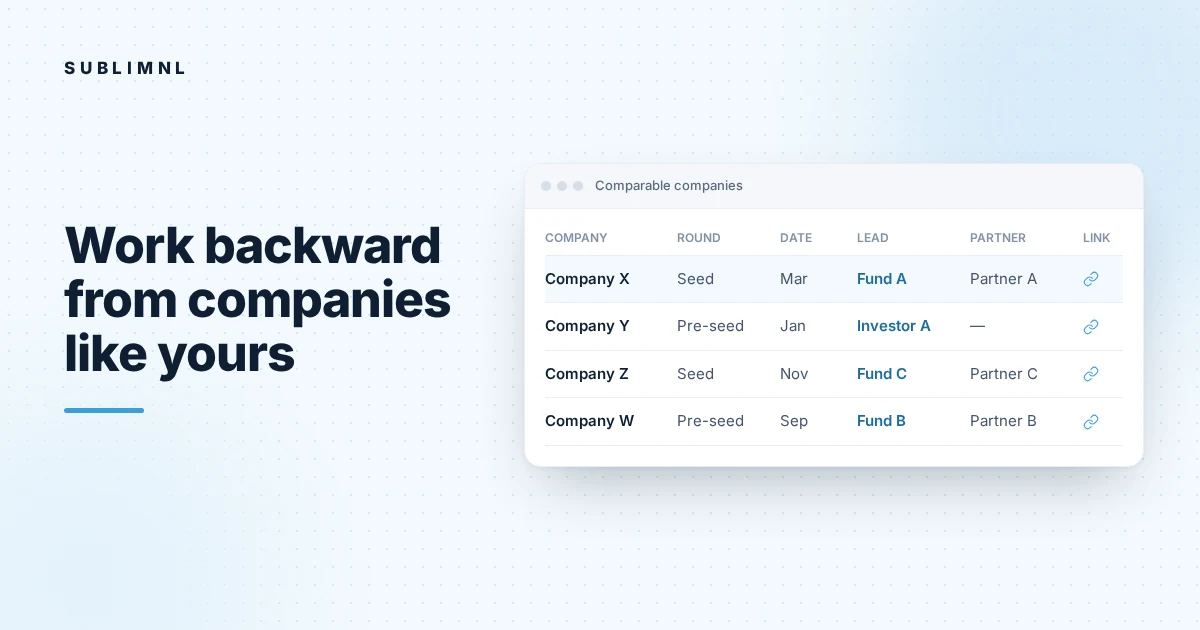
The best investor list I know how to build doesn't start with investors at all. It starts with companies. Learning how to find out who invested in a company is the fastest route to a short list of people who've already backed your stage and your sector, with their own money, recently.
Our guide on finding investors for your startup puts it in one line: find startups in your sector that raised the round you're raising in the last year or two, and note who led. This post turns that line into a method you can repeat.
Why companies make a better starting point than investors
Investor bios are written to be broad. Most firms will tell you they back "exceptional founders in large markets," which describes almost everyone. A funding announcement is different. It tells you what an investor actually did: which company, which round, roughly when, and who went first.
That last point matters most. You're looking for leads, because a round needs someone to commit first. A firm that led a seed round for a company like yours last year has shown you, in public, that it does exactly what you need.
Step 1: List comparable companies

Start with a sheet and a plain definition of "like yours." Use the same filter you'd use for your own round: same sector, same stage, ideally the same kind of customer. A company making load-booking software for regional freight carriers isn't comparable to one making consumer travel apps, even if both say "logistics."
Where to look for comparables:
- Companies you already compete with or get compared to.
- Startups your customers mention.
- Companies that show up in the same market news you read.
- Portfolio pages of firms you already know invest in your space.
Aim for companies that raised the round you're raising in the last year or two. Older rounds tell you less, because partners move and focus changes.
Step 2: Find the funding announcement
For each company, look for the announcement of the round. Funding announcements and the companies' own news pages usually name the lead investor. Many also name the partner who did the deal, and sometimes the other participants.
Search for the company's name plus the round, and check its own blog or press page. If the company has a news page, start there. It's the source closest to the facts.
How to find out who invested in a company when it's not obvious
Sometimes the announcement is vague, or there isn't one. A few fallbacks:
- The investor's portfolio page. Firms list companies they've backed. If a company appears on a fund's portfolio, that's a strong hint, though it may not say which round or whether the firm led.
- The founders' own posts. Founders often thank their investors by name when a round closes.
- Later announcements. A company's next round often mentions "existing investors," which can confirm who was there earlier.
If you can't confirm who led, write "unconfirmed" and move on. Guessing puts the wrong firms at the top of your list.
Step 3: Record the lead, and the partner
Keep the sheet simple. These columns do the job:
| Company | Round | Date | Lead investor | Partner | Source link |
|---|
The source link matters more than it looks. When you come back to a name later, you'll want to check what you saw rather than trust your memory.
The partner column matters too. One partner usually covers your sector, and that's who you'll write to. Our post on pitching the right VC partner covers how to find them and what to read before you do.
Step 4: Check each lead on its own site
A deal from last year is a strong signal, not a guarantee. Before a firm goes on your final list, read its own site. Confirm the portfolio, the stated stage and check size, and how it wants to be reached. The firm's own words beat any database field. Our post on what to read on a VC firm's website has a short checklist.
It's also worth asking whether the firm still has money to invest. A firm that raised a new fund recently is actively writing checks. Sublimnl builds its own list from SEC Form D filings, updates it every week, and shows you the investors who backed companies like yours in the last two years, with the filing and the public announcement behind each deal. It's included with every Sublimnl plan. Fund announcements and the firm's recent deals still tell you a lot.
What you end up with
After a few evenings, you'll have a list that's short and specific. Every name has led a round like yours, in your sector, recently. When you write to them, your "why you" line is already done: you can point to a company they backed. That's the kind of detail that shows you didn't send the same email to everyone.
FAQ
How many comparable companies should I research?
Enough to give you a solid core list of leads who fit your round. There's no fixed number. Stop when new companies keep pointing you to the same investors.
What if the company I'm researching didn't announce its round?
Check the investors' portfolio pages, the founders' posts and any later announcements. If you still can't confirm who led, mark it unconfirmed rather than guessing.
Should I contact investors who followed but didn't lead?
They can belong on your list, especially once you have a lead. But put the firms that lead your stage at the top, and spend your warm introductions on them first.