
BlogResearch
Are investor databases worth it? Only if the list is fresh
Every founder building a list hits the same question within a day or two: are investor databases worth it? The short answer from our guide on finding investors for your startup is: only if the list is fresh and you can see why each investor is on it. A lot of databases are big but rarely checked. Sublimnl builds its own list from SEC Form D filings, updates it every week, and shows you the investors who backed companies like yours in the last two years, with the filing and the public announcement behind each deal. It's included with every Sublimnl plan.
A list still doesn't tell you whether that investor will read your email. Confirm the fit before you send.
What a database is good at
Databases are a fast way to start a list. They gather a lot of firms in one place and let you filter by stage, sector, geography and check size. For a founder who doesn't know the investors in their market yet, that's genuinely useful. You get a long list of candidates in an afternoon instead of a week.
They're also good for discovery. You'll find firms you'd never have heard of, especially smaller and regional ones.
What a database can't tell you

Fields go stale. A firm's focus changes, a partner leaves, a fund stops making new investments. Database entries don't always keep up.
More importantly, a database can't tell you:
- Whether the firm is writing new checks right now.
- Which partner actually covers your sector today.
- How the firm wants to be reached.
- Whether anyone at the firm will read what you send.
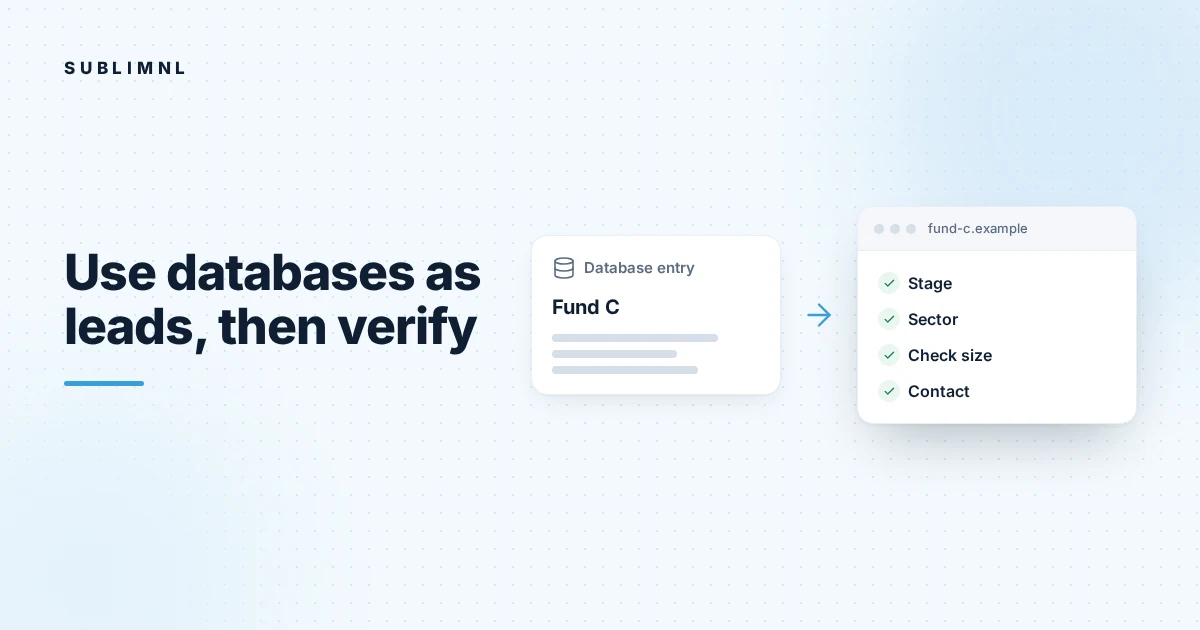
That's why our guide says to treat database fields as leads and confirm stage, sector and contact on the firm's own site before you send.
How to verify investor contact information and fit
For every name you pull from a database, do a quick check against the firm's own site. Our post on researching a VC firm's website has the full checklist. The short version:
- Stage. Does the site say they invest at your stage?
- Sector. Does the portfolio include recent companies like yours?
- Region. Do they invest where you are?
- Partner. Who covers your sector now?
- Channel. Do they take a form, introductions, or email?
When the site and the database disagree, trust the site. The firm's own words beat any database field.
When are investor databases worth it?
Pay only if the list is fresh and you can see why each investor is on it. A lot of databases are big but rarely checked.
In practice, that means asking a few honest questions before you pay:
- Can you see why each name is there? A filing and a public announcement are reasons you can check. A name with no source is not.
- How fresh is the data? Spot-check a few firms you know. If their entries are out of date, others will be too.
- What will you do with it? A database helps you find names. It won't write your "why you" line or get you an introduction.
- Can you cancel easily? Most founders need a list for one raise, not forever.
When it's not worth it
If most of your round is coming from warm introductions, you probably don't need one. If your market is small and you already know the active investors, a database adds little. And if you're tempted to email everyone a database returns, stop. Emailing every result just collects more polite passes.
Why each investor is on the list
Some of the best signals are public but scattered. Who backed companies like yours in the last two years. Which firms recently raised a new fund. What a partner has written about lately. A list is worth using when you can see those reasons, not just a name.
New funds are a good example. A firm that raised recently is actively writing checks, and many US funds file a Form D with the SEC when they raise. Sublimnl builds its own list from SEC Form D filings, updates it every week, and shows you the investors who backed companies like yours in the last two years, with the filing and the public announcement behind each deal. It's included with every Sublimnl plan. Fund announcements and EDGAR are still there if you want to check a filing yourself.
A sensible way to combine them
Start from a list that is fresh and shows why each investor is on it. Cut it down with your four filters: round and size, who leads, your sector, and where you are. Then confirm every remaining name on the firm's own site. What's left is a list you can actually work.
FAQ
Are investor databases worth paying for?
Only if the list is fresh and you can see why each investor is on it. A lot of databases are big but rarely checked. Sublimnl builds its own list from SEC Form D filings, updates it every week, and shows you the investors who backed companies like yours in the last two years, with the filing and the public announcement behind each deal. It's included with every Sublimnl plan.
Is a free investor database good enough?
Only if that list is fresh and you can see why each investor is on it. A lot of databases are big but rarely checked. Size alone isn't a reason to use one, and you still confirm each name on the firm's own site before you send anything.
How do I know if database information is accurate?
Spot-check it. Look up a few firms you know well and compare their entries with their own websites. If those are out of date, assume others are too.
Can a database tell me which investors will reply?
No. A database tells you who might fit. Whether an investor reads your email depends on fit, timing, and how you reach them.